
Challenges
- Environmental contribution
- Safety: Maintenance-free products, diagnosis of tire wear
- Commercializing airless tires
- Ultimate enjoyment of driving and sophisticated features
Relevant stakeholders
Direct:Customers(consumers), suppliers, employees, research institutions
Indirect:Shareholders and investors, creditors, local communities, NGOs/NPOs, industry groups
Our policy
We recognize that ensuring the sustainability of a mobility society is a key prerequisite directly linked to the Group’s medium- to long-term business foundation as a manufacturer of tires and automotive parts. Based on this recognition, we have been working to improve product performance that reduces environmental impacts, enhances safety, and facilitates more efficient movement and transportation.
In addition to advancing these fundamental performance aspects, we aim to create added value that supports the qualitative enrichment of a mobility society by offering products and services that cater to the diverse values in people’s mobility-related lifestyles.
Responsible executive (as of April 2026)
Director, Senior Corporate Officer and Vice President of R&D Headquarters
Organizational responsibilities
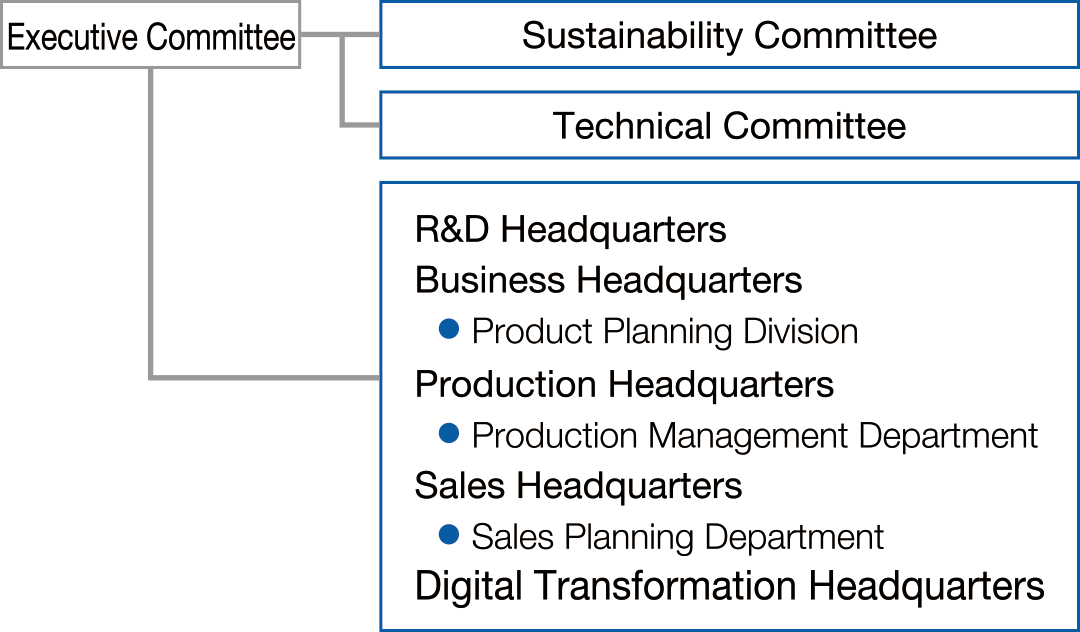
Spearheaded by our R&D Headquarters, we are working together with product planning, production management, sales planning and digital transformation (DX) functions and promoting sustainability-related activities based on various themes that correlate with the aims of our medium-term business plan.
The Technical Committee oversees the overall implementation of those activities and reports progress to the Sustainability Committee.
Reporting systems
- Reporting hotline (whistle-blowing system): For executives, employees and suppliers
- Customer Relations Department: For customers (consumers) and local communities
-
Online inquiry form: For customers (consumers), shareholders and investors, and NGOs/NPOs
In addition to the above routes, our technical service departments, Group sales companies and distributors also receive inquiries and complaints.
Main resources for promoting activities (2025)
- R&D expenses: 13,795 million yen*including 1,742 million yen for basic research expenses
- Expenses related to environmental conservation during R&D activities: 621 million yen
- Capital investment in rationalization, improving quality and enhancing production facilities: 29,995 million yen
- R&D bases: 5 bases (Japan, US, Germany)
- We are strengthening our unique technologies and developing differentiated products by encouraging cooperation between our R&D functions in Japan, the US and Europe. We also conduct joint research with multiple universities and research institutes.
Reducing the environmental impact of mobility
Improvements in fuel efficiency with each new model release
Reducing vehicles’ CO₂ emissions is a challenging issue that needs to be addressed throughout the supply chain in order to achieve carbon neutrality by 2050. We are pressing ahead with initiatives that contribute to reducing CO₂ emissions from mobility by improving tire performance, which affects energy consumption during driving.
We aim to contribute to a 20% reduction in CO₂ emissions per tire by 2030 compared with 2019. To achieve this target, we will steadily enhance fuel efficiency at each model change of our core products based on our medium-term product development plan, continuously building on performance improvements. Our R&D function is advancing platform technologies focused on reducing rolling resistance in anticipation of trends in the automotive industry and the performance levels required in the future. They also incorporate into product planning the needs identified by our sales function, based on the demand and actual usage conditions in each market. By combining these two perspectives and clearly defining functional and performance upgrades, including fuel efficiency performance, as development requirements, we bring them to life in the form of products.
Our EV strategy
The global shift toward electric vehicles (EV) may be slowing, but electrification remains one of the most effective options for reducing automobile CO2 emissions, so we expect the spread of EVs to continue as energy conditions and vehicle usage in each country and region evolve. Given that considerable emphasis is placed on EV cruising range on a single charge, we are working to develop tires characterized by low power consumption that contributes to extending this range. At the same time, we are working to achieve performance that accommodates the increased vehicle weight from battery installation and the handling changes caused by the use of regenerative braking*1.
- *1 A form of electric braking that uses shaft rotation power to convert kinetic energy into electrical energy that can be captured and reused, as opposed to, under normal conditions, using a motor to convert electric power into a driving rotational force
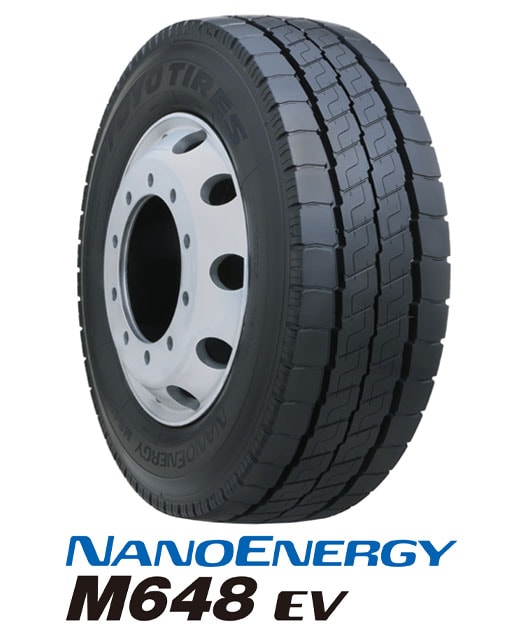
NANOENERGY M648 EV tire for fixed-route electric buses
The Ministry of Economy, Trade and Industry’s Green Growth Strategy Through Achieving Carbon Neutrality in 2050 has laid out the goal of achieving carbon neutrality across the entire automobile lifecycle, which is helping drive the spread of EVs in Japan.
We developed the NANOENERGY M648 EV tire specifically for fixed-route electric buses.
Electric buses are equipped with high-capacity drive batteries that make them particularly heavy, while the high torque of electric motors places greater stress on tires during acceleration and braking. This means that EV tires require higher wear resistance than conventional tires. Driving range per charge is also a key factor for EVs, making it increasingly important for tires to have low rolling resistance for higher vehicle energy efficiency.
As large buses that are used on urban and regional routes will increasingly go electric, we developed the NANOENERGY M648 EV tire to be specially optimized for fixed-route electric buses with enhanced wear resistance and energy efficiency features.
High wear resistance and low rolling resistance are typically at odds, so we improved both using a variety of approaches including materials, structure, and tread pattern design. This enabled us to achieve a better balance between these two performance characteristics, with an 8% improvement in wear resistance and a 4% improvement in rolling resistance compared to our previous products.*2In this case, one factor in particular that improved both characteristics was the new formulation of a wear-resistant NCP compound*3developed through advancements in the processing technology of Nano Balance Technology, our proprietary rubber design platform technology.
We also enhanced wear resistance by increasing block size and rigidity to give the tire more equalized ground contact pressure and limit excessive block deformation upon contact, and reduced uneven wear by adding new contact edge sipes to the sidewall. Rolling resistance has been reduced with a new tread pattern design that uses high-rigidity blocks, based on our e-balance*4proprietary platform technology for developing truck and bus tires. The tire also incorporates recycled bead wire made from sustainable materials, helping reduce environmental impact.
- *2 M638 tire for trucks and buses (not marketed specifically for EVs)
- *3 A rubber compound optimally designed with wear-resistant polymers and highly active wear-resistant carbon added to a base of Nano Composite Polymer, which reduces energy loss
- *4 Our proprietary technology that achieves balanced improvements to fuel efficiency, durability and environmental performance through tire shape stability, high-rigidity beads, and optimization simulation
Primary performance evaluation
・8% improvement in wear resistance
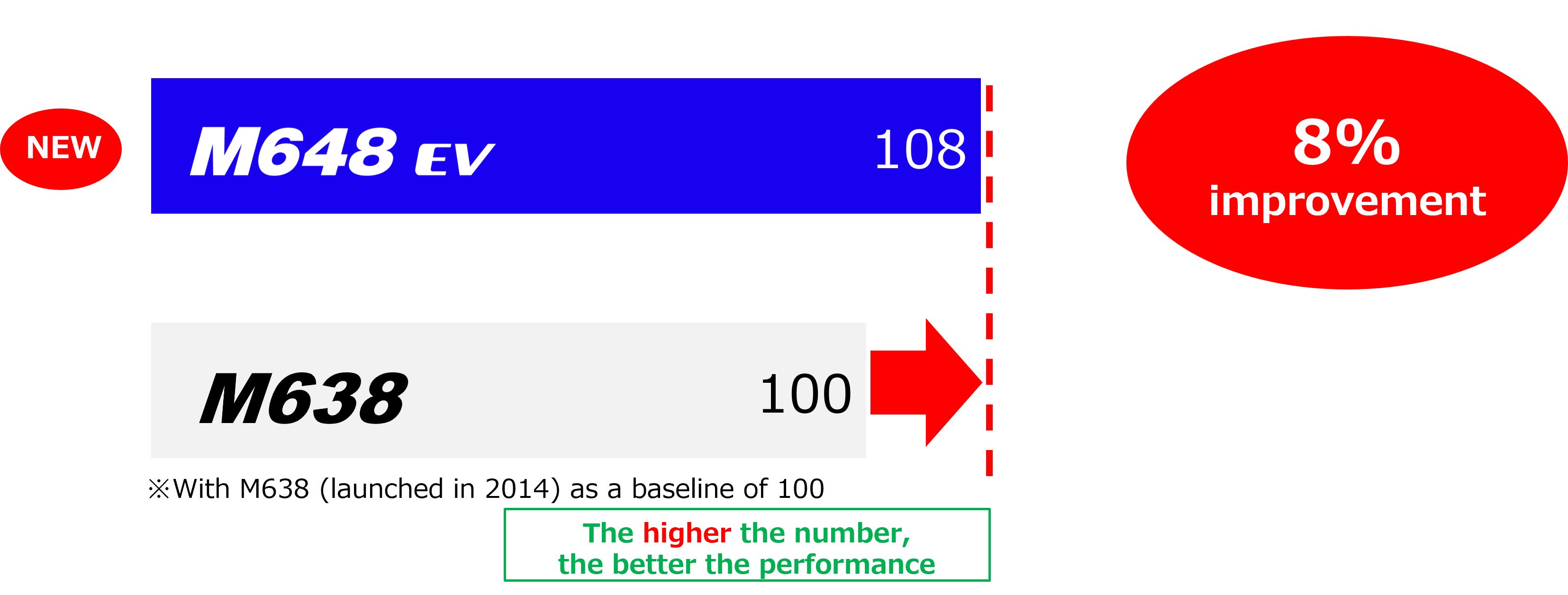
[Test conditions]
・Evaluated size: 275/70R22.5 148/145J
・Location: Near Itsukaichi, Akiruno City
・Distance traveled: 9,084 km (vehicle A) and 9,366 km (vehicle B)
・Vehicle used: BYD K8; Axle arrangement: 2-D
・Rated output: 150 kW
・Rim size: 22.5 x 8.25
・Tire pressure: 900 kPa
・Rotation: Yes
・Evaluation method: Comparison of total average estimated wear life of rear axle (calculated using a minimum remaining tread depth of 1.6 mm)
- ※ There is no guarantee that the exact same results would be generated even if the test was repeated under similar conditions.
- ※ Detailed data from the above-illustrated test have been delivered to the Tire Fair Trade Council.
4% reduction in rolling resistance
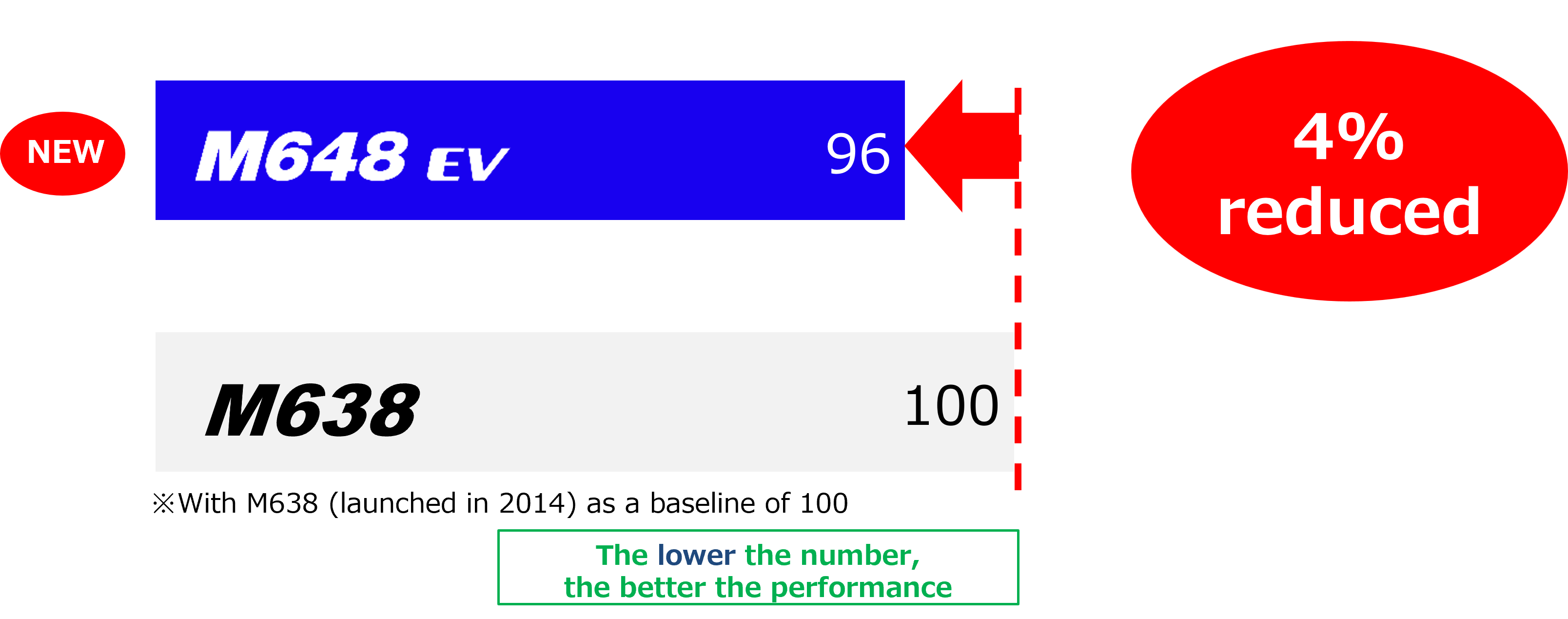
(Measurement method)
Measure rolling resistance values on the Toyo Tire Corporation indoor drum-type rolling resistance testing equipment
[Test conditions]
・Evaluated size: 275/70R22.5 148/145J
・Location: Toyo Tire Corporation Kuwana Plant
・Testing equipment: TB rolling resistance testing equipment
・Test method: UN R117 force-type
・Rim size: 22.5 x 8.25
・Tire pressure: 900 kPa
・Load: 26.26 kN
・Speed: 60 km/h
- ※ There is no guarantee that the exact same results would be generated even if the test was repeated under similar conditions.
- ※ The rolling resistance test reduction rate does not match the actual fuel consumption reduction rate.
- ※ Detailed data from the above-illustrated test have been delivered to the Tire Fair Trade Council.
Ensuring safety and security in mobility
Achieving stable driving performance and longer tire life
As mobility is indispensable to social infrastructure, ensuring safe driving and stable transportation is key to realizing a sustainable mobility society. Trucks and buses form the foundation that underpins logistics and the flow of people, and tires that play a role in their operation are likewise required to ensure safety and reliability. Through research and development aimed at reducing uneven wear, we work to maintain the inherent performance of tires, such as water drainage performance, as well as handling stability, thereby helping to reduce driving risks. Furthermore, we believe that reducing uneven wear not only conserves resources by extending tire life, but also enhances comfort by reducing vibration and noise, and helps lessen driver workload by decreasing the frequency of tire replacements.
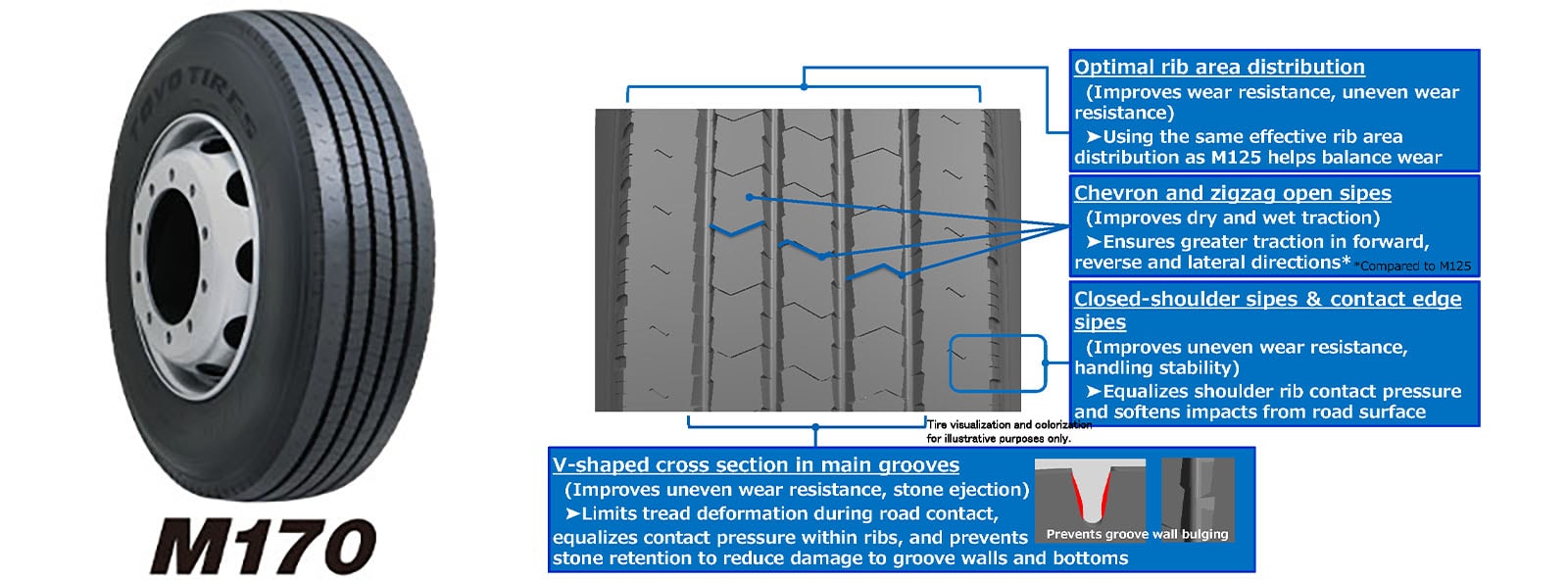
M170 low-maintenance ribbed tire for trucks and buses
We designed the M170 ribbed tire to be particularly low maintenance, and launched it in the Japanese market.
Since its launch in 1994, our M125 tire has been highly regarded by our customers in the logistics industry for its uneven wear resistance. The newly developed M170 uses the same effective rib area distribution, and has an improved tread pattern for even greater uneven wear resistance, as well as enhances traction and handling stability. This helps improve driving comfort and reduces the amount of tire maintenance required for vehicle management.
We developed this tire using our proprietary e-balance*5 platform technology for truck and bus tires. The closed-shoulder sipes and contact-edge sipes are positioned to equalize contact pressure within the shoulder rib, limiting uneven wear while softening impacts from the road surface to improve handling stability. A V-shaped cross-section in the main tread grooves also minimizes tread deformation, which reduces uneven contact pressure. The design also prevents small stones from entering the tread, helping reduce damage to the groove walls and bottoms.
We have also optimized the tread pattern for each tire size, with four grooves for 19.5-inch tires and larger, and three grooves for 17.5-inch tires. With the right amount of rigidness for these types of vehicles, this tire provides excellent wear performance.
We will continue to leverage our many years of specialized expertise as we put even greater focus on developing truck and bus tires that help meet the needs of our customers and wider society.
- *5 Our proprietary technology that achieves balanced improvements to fuel efficiency, durability and environmental performance through tire shape stability, high-rigidity beads, and optimization simulation
Adapting to changing weather patterns and road surfaces
Due to heavy rainfall and other events caused by intensifying climate change, road surface conditions during driving can now change rapidly, making it increasingly important for us to ensure stable driving performance in our tires. We consider the enhancement of wet performance as a key development theme and are advancing product development that delivers stable grip and water drainage performance even on wet road surfaces. We will contribute to the realization of mobility that can be used with confidence by anticipating a wide variety of driving conditions.
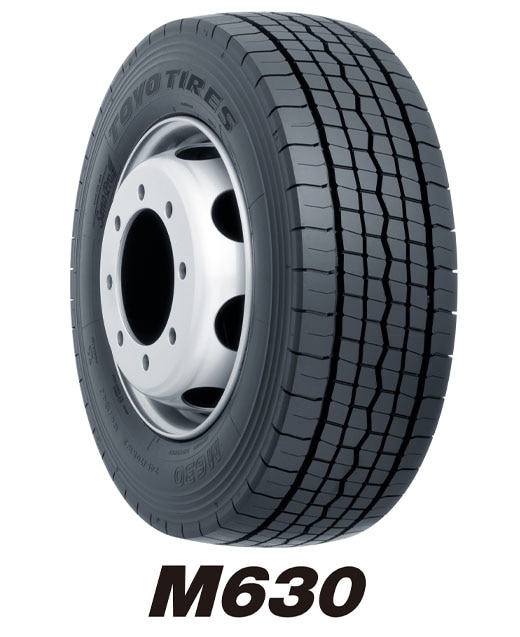
M630 all-weather tires for trucks and buses
Due to new working hour regulations introduced in 2024 and increasing driver shortages, improving transportation efficiency and maximizing vehicle utilization have become urgent priorities in the logistics industry. A shortage of mechanics has also created a need to streamline maintenance.
Large four-axle low-floor trucks are widely used in logistics because their design provides a large load capacity that makes them ideal for high-volume transport. However, their structure makes the tires on the second front axle particularly susceptible to lateral forces, leading to a tendency for uneven wear on the tire shoulders. This uneven wear shortens tire life and increases replacement frequency, thus increasing the need for maintenance. We have developed the new M630 to address this challenge specific to four-axle low-floor trucks.
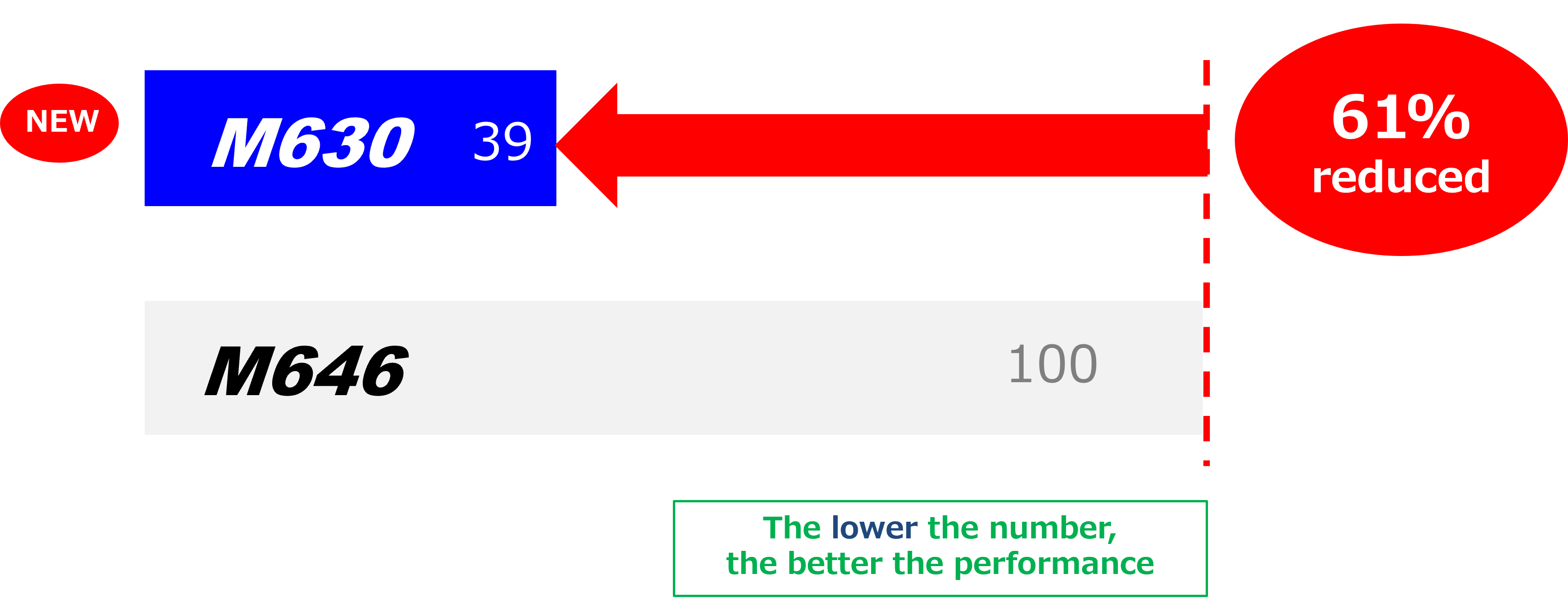
The M630 uses a new tread pattern with wider shoulder blocks and tread width, which effectively limits block deformation. This results in excellent uneven wear resistance, reducing shoulder wear — which leads to shorter replacement cycles — by 61% compared with our previous product.*6 Wear resistance is also further improved through smaller, higher-density center blocks that more suitably disperse ground pressure right where it tends to concentrate.
We have also optimized block rigidity by utilizing our proprietary e-balance*7 platform technology for truck and bus tires. Stabilizing the contact footprint reduces rolling resistance, which improves fuel efficiency.
- *6 M646 all-weather tires for trucks and buses (launched in March 2020)
- *7 Our proprietary technology that achieves balanced improvements to fuel efficiency, durability and environmental performance through tire shape stability, high-rigidity beads, and optimization simulation
Primary performance evaluation
・61% reduction in shoulder wear
[Test conditions]
・Evaluated size: 245/70R19.5 136/134J
・Location: Transport between Nara and Tokyo (operated on the same route by the same user using the same vehicle type)
・Vehicle used: Mitsubishi 2PG-FS74HZ (engine capacity of 10.67 L)
・Distance traveled: 87,512 km (M630); 117,207 km (M646)
・Rim size: 19.5 x 6.75
・Tire pressure: 850 kPa
・Rotation: No
・Evaluation method: Comparison of wear differences on the second front axle (converted to 100,000 km)
- ※ There is no guarantee that the exact same results would be generated even if the test was repeated under similar conditions.
- ※ Detailed data from the above-illustrated test have been delivered to the Tire Fair Trade Council.
5% improvement in wear life
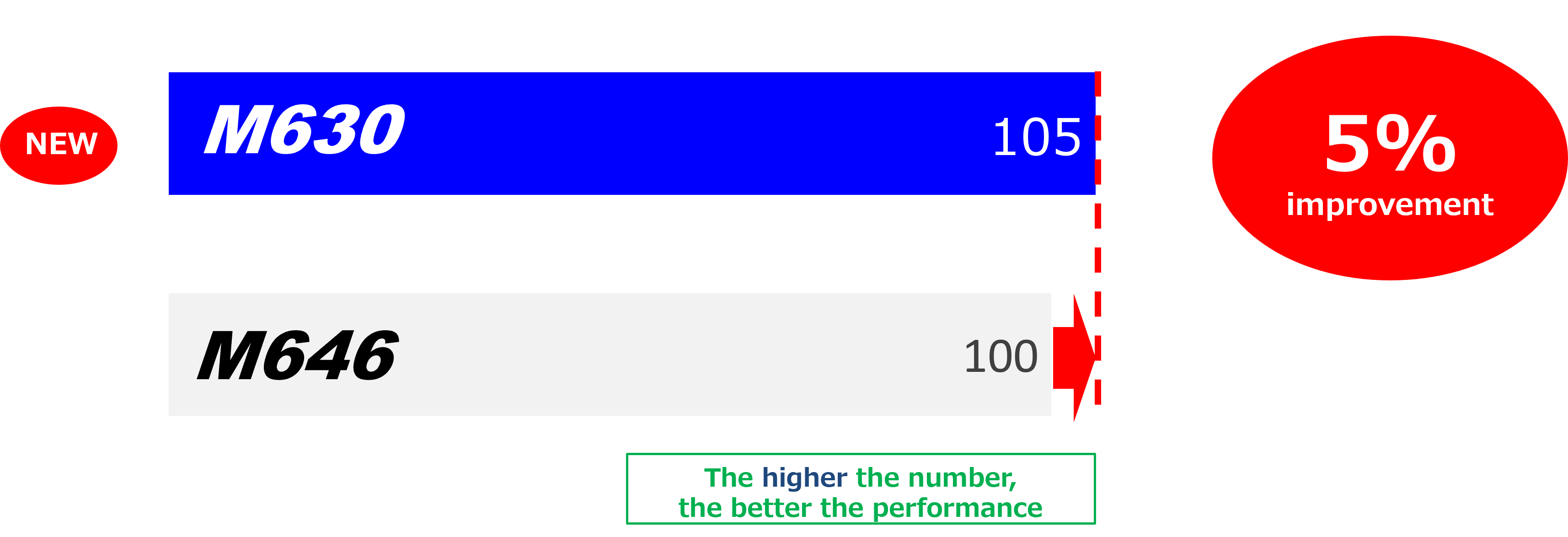
[Test conditions]
・Evaluated size: 245/70R19.5 136/134J
・Location: Transport between Nara and Tokyo (operated on the same route by the same user using the same vehicle type)
・Vehicle used: Hino 2DG-FW1AHG (engine capacity of 8.86 L)
・Distance traveled: 94,107 km (Vehicle A); 100,928 km (Vehicle B)
・Rim size: 19.5 x 6.75
・Tire pressure: 700 kPa
・Rotation: Yes
・Evaluation method: Comparison of total average estimated wear life of rear axle (calculated using a minimum remaining tread depth of 3.2 mm)
6% reduction in rolling resistance
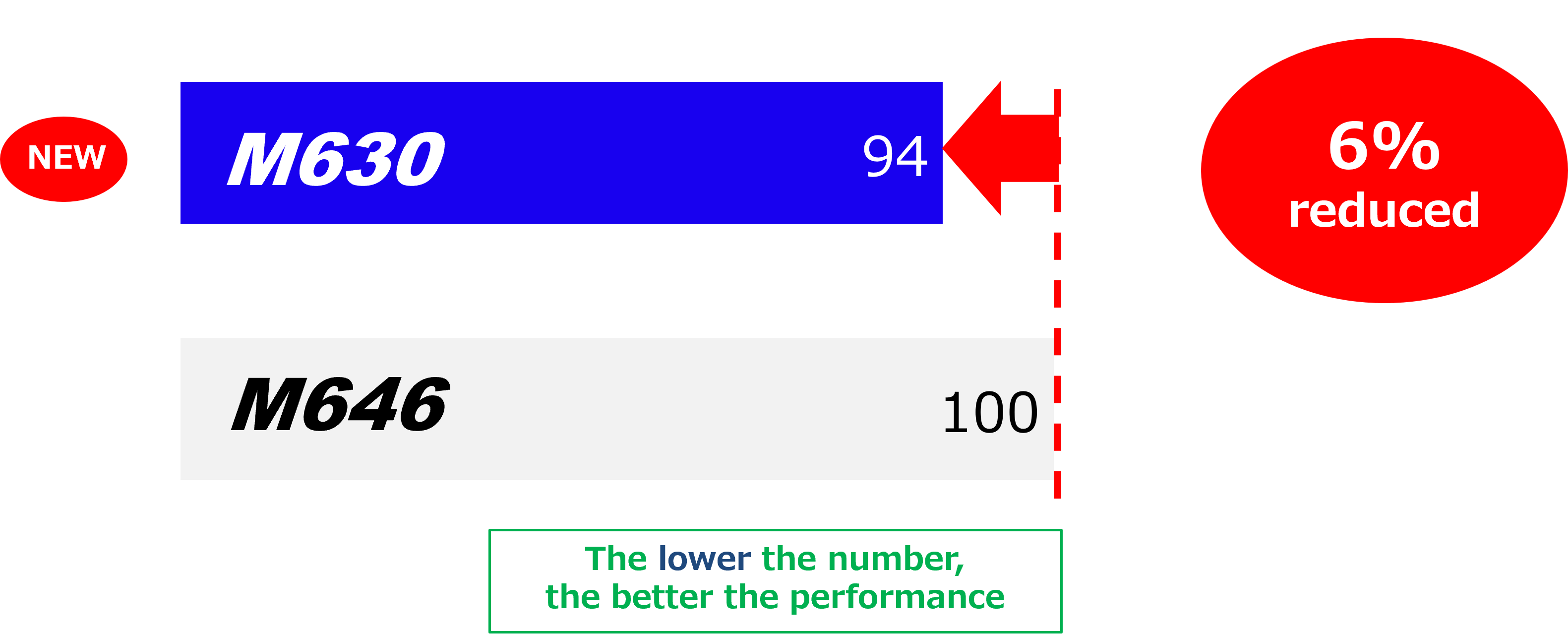
(Measurement method)
Measure rolling resistance values on the Toyo Tire Corporation indoor drum-type rolling resistance testing equipment
[Test conditions]
・Evaluated size: 245/70R19.5 136/134J
・Location: Toyo Tire Corporation Kuwana Plant
・Testing equipment: TB rolling resistance testing equipment
・Test method: UN R117 force-type
・Rim size: 19.5 x 7.50
・Tire pressure: 850 kPa
・Load: 18.67 kN
・Speed: 60 km/h
Toward a fulfilling mobility life, inspired by the joy of driving
We are working to create value along two axes: fundamental value that supports a mobility society (measures to address safety and the environment) and added value that enhances people’s quality of life (enjoyment and diversity).
In addition to improving basic tire performance and sustainability requirements, we are advancing technological developments and commercializing products in pursuit of ultimate driving enjoyment and exquisite design features, beginning with value creation that resonates with the sensibilities of users. To that end, we are deepening our understanding of customer insights through market research while also exploring design trends and accumulating design pattern expertise. We believe that our purpose lies in supporting the qualitative enrichment of people’s mobility-related lifestyles through this series of activities.
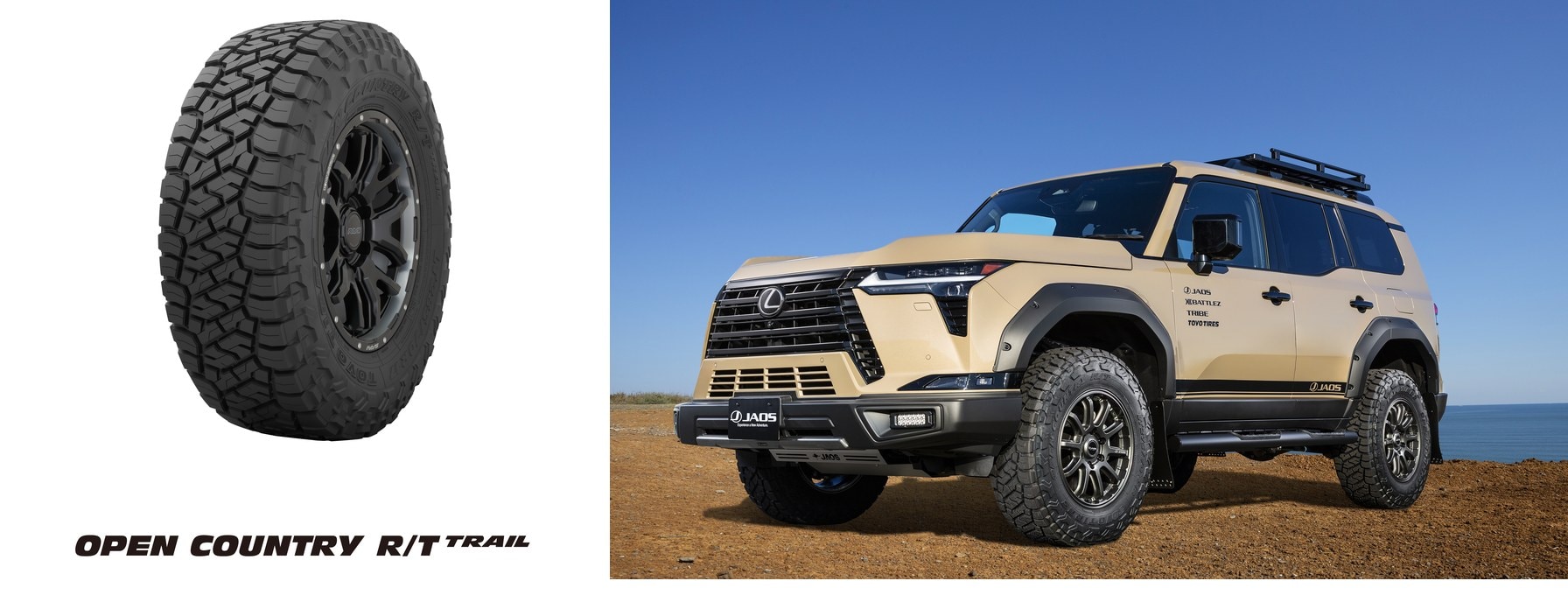
The Open Country series, which offers a high degree of balance between functionality and design, has garnered high praise and support from users who share the brand’s values not only in North America but also in Japan and other Asian countries, and its size lineup continues to expand. Furthermore, we are responding to the broad-ranging preferences of users by expanding the lineup with visually appealing options such as white-letter designs.
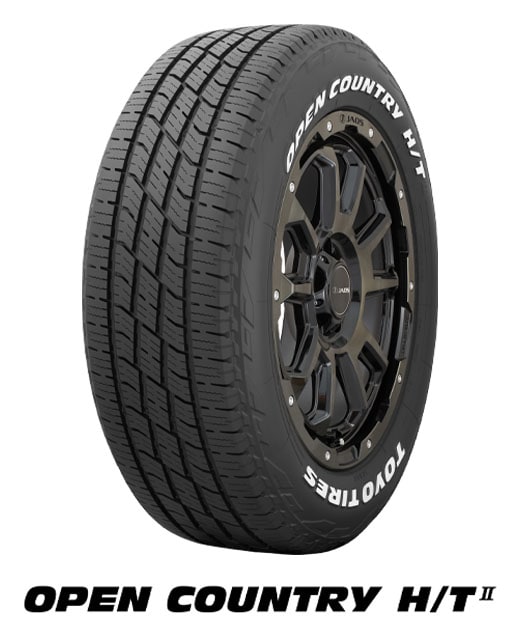
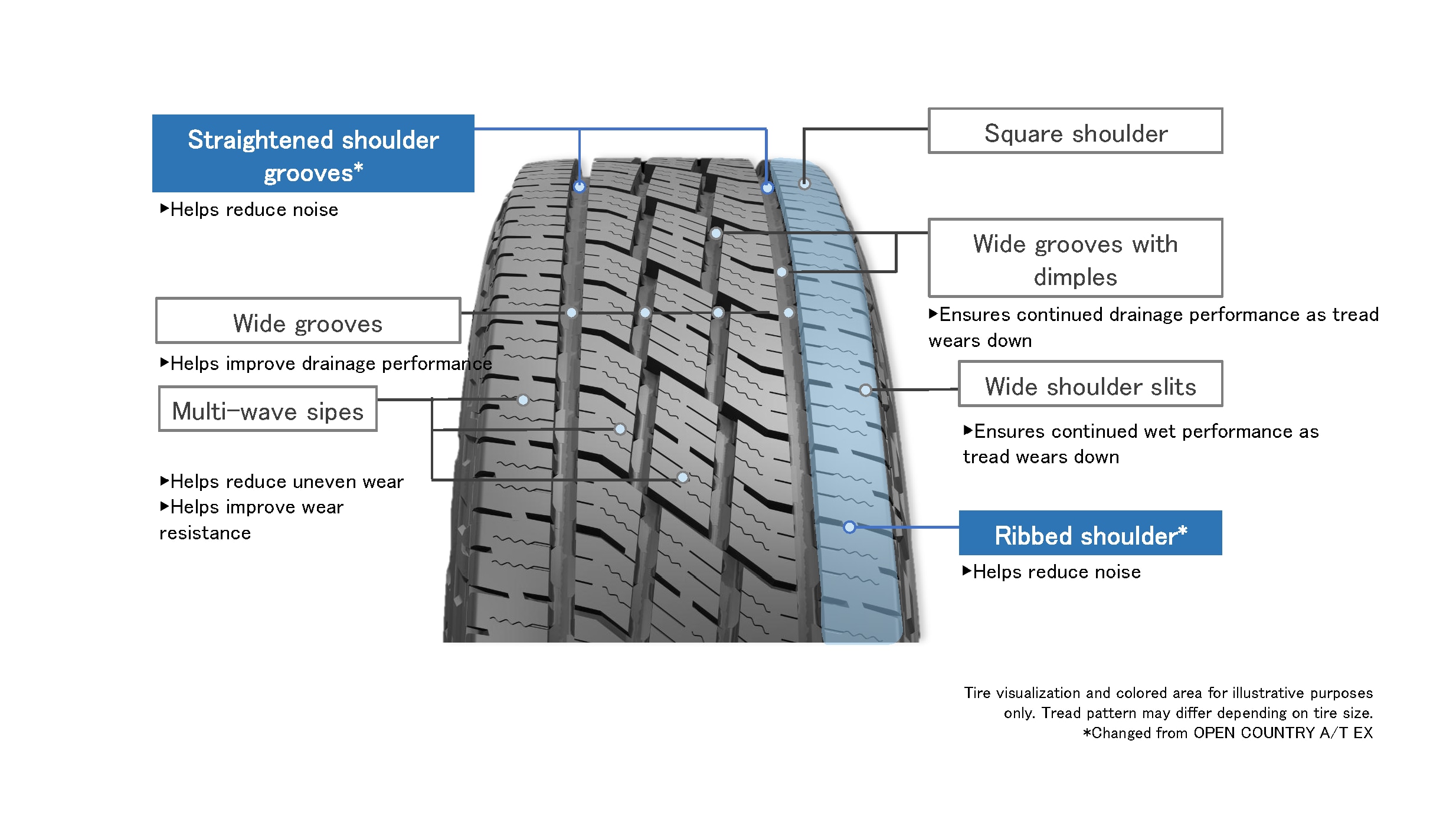
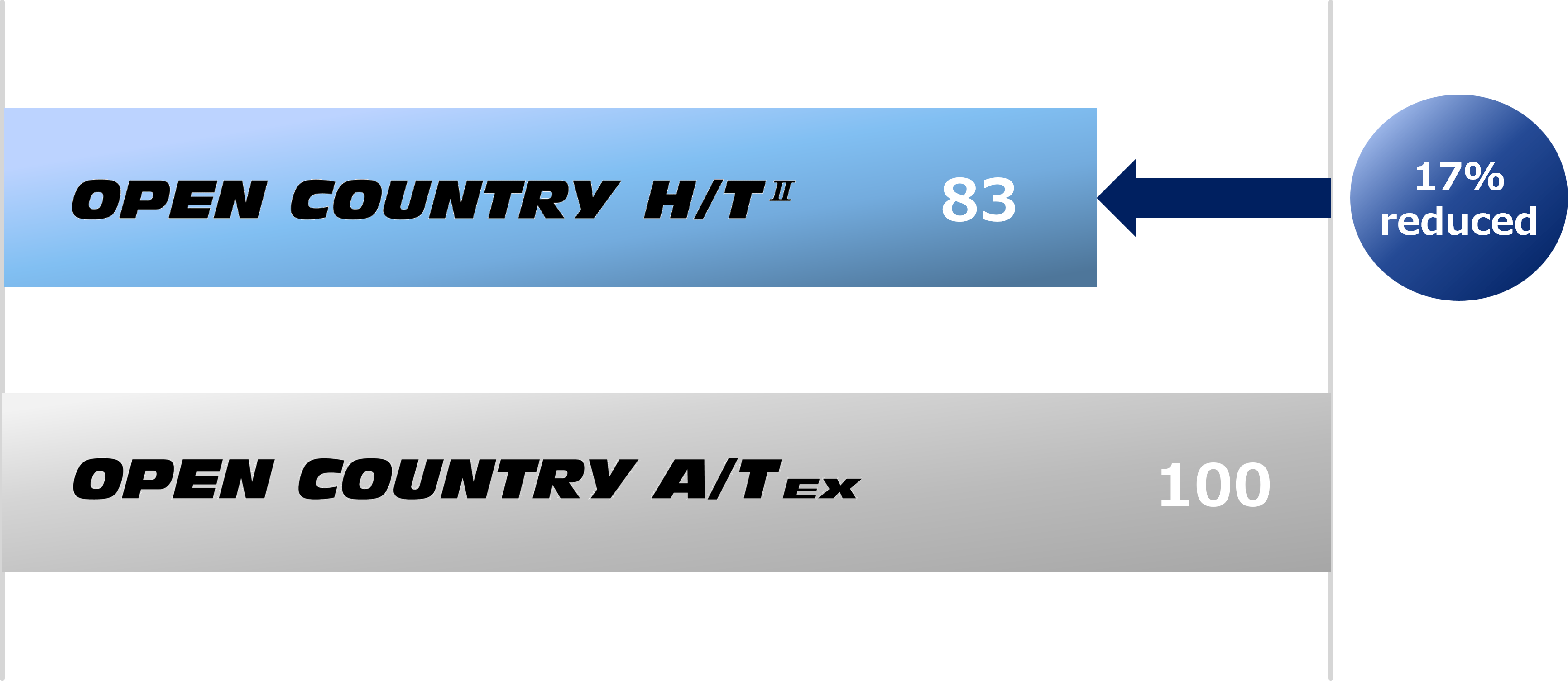
OPEN COUNTRY H/T II highway terrain tire*8 combining reduced noise with low rolling resistance
This product was developed in response to user demand for a lineup that combines aggressive tread pattern designs with performance suited to city driving. By adopting a super-active polymer that enhances silica dispersion to improve rubber strength through our proprietary material design technology, this tire achieves a high-level balance between design aesthetics and optimized fuel efficiency, wet performance and wear resistance.
- *8 A category of quieter tires that are better suited to driving on paved roads and highways and offer higher degree of driving comfort than the all-terrain category
Rolling resistance(INDEX)
[Test conditions]
(Location) Toyo Tire Corporation indoor drum-type rolling resistance testing equipment
[Test conditions]
・Tire size: OPEN COUNTRY A/T EX225/65R17 102H, OPEN COUNTRY H/T II 225/65R17 102H
・Rim size: 17 x 6.5
・Tire pressure: 210 kPa
・Load: 6.67 kW
・Speed: 80 km/h
- ※ There is no guarantee that the exact same results would be generated even if the test was repeated under similar conditions.
- ※ Detailed data from the above-illustrated test have been delivered to the Tire Fair Trade Council.
【TOPIC】
OPEN COUNTRY R/T receives Minkara PARTS OF THE YEAR 2025 Hall of Fame Award (SUV/4X4 tire category) for the fourth year in a row*9
Operated by LY Corporation, Minkara (short for “Everyone’s Car Life” in Japanese) is one of Japan’s largest specialist automobile social media platforms where car lovers post and discuss various car-related topics. Minkara aggregates the number of parts user reviews and the scores, and ranks parts with the highest support in its PARTS OF THE YEAR survey announced twice a year in the middle and the end of the year. OPEN COUNTRY R/T has been in the top rankings since the 2017 first-half awards, and was inducted into the Hall of Fame for the first time at the 2022 annual awards. 2025 marks its fourth consecutive year in the Hall of Fame. OPEN COUNTRY A/T III took second place in the same category, while in the Eco Category, PROXES CL1 SUV was nominated for third place and TRANPATH mp7 for fifth place. Going forward, we will continue to accurately grasp market trends and attentively incorporate user insights to help develop highly unique and attractive products.
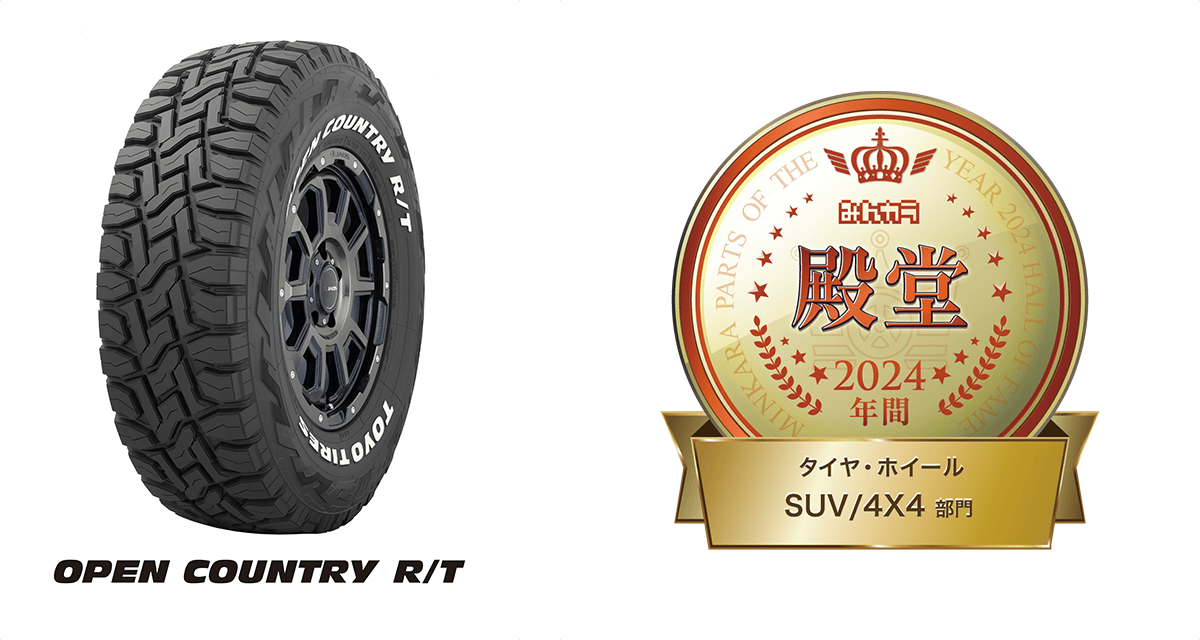
- *9 This award is presented for parts that have garnered unwavering support in PARTS OF THE YEAR rankings over the past several years.
Providing value for evolving mobility in a changing society
In Japan, the deployment of so-called green slow mobility services*10 is progressing as one solution to a wide range of social issues faced by local communities, including the uptake of low-carbon mobility, the viability of local transportation in aging communities, and the rollout of new mobility services as tourism resources.
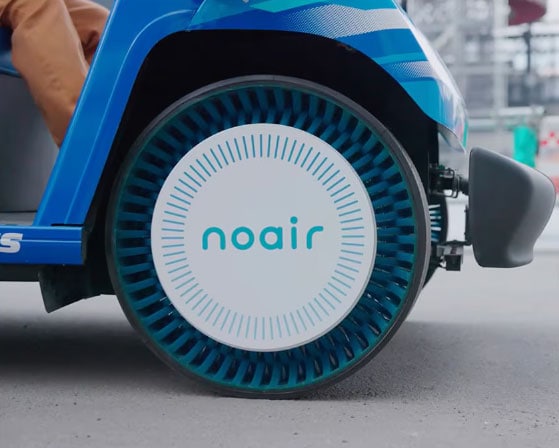
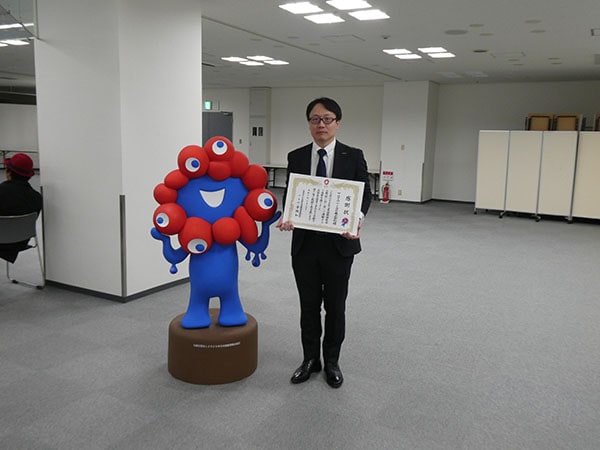
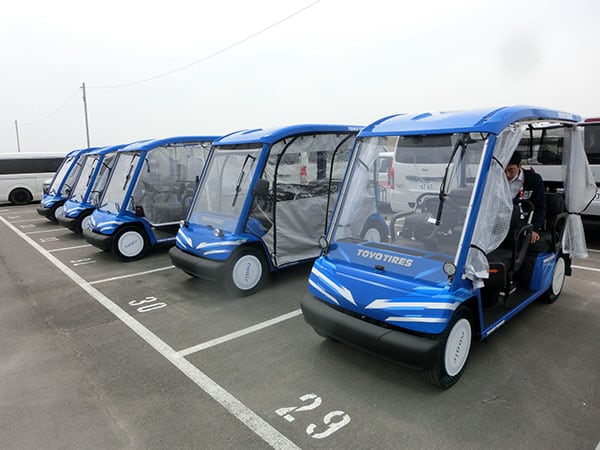
Our “noair” airless tire features a structure that does not use air, eliminating the need for puncture repairs or air pressure maintenance. This means less maintenance overall is required, while still achieving stable driving performance. In particular, in addition to its application in green slow mobility services, which operate at low and constant speeds, we believe this technology has the potential to be used in operating environments with limited maintenance opportunities because it can help prevent decreased performance and safety risks resulting from insufficient maintenance. Furthermore, we are working to reduce rolling resistance and weight, which is also expected to help lower environmental impacts by reducing energy consumption during driving. We are also pressing ahead with demonstration testing with a view to practical application. For example, we provided electric carts equipped with “noair” tires for use by officials involved in the operation and management of the 2025 World Expo.
- *10 A small mobility service that uses electric vehicles permitted on public roads that are capable of speeds up to 20 km/h